

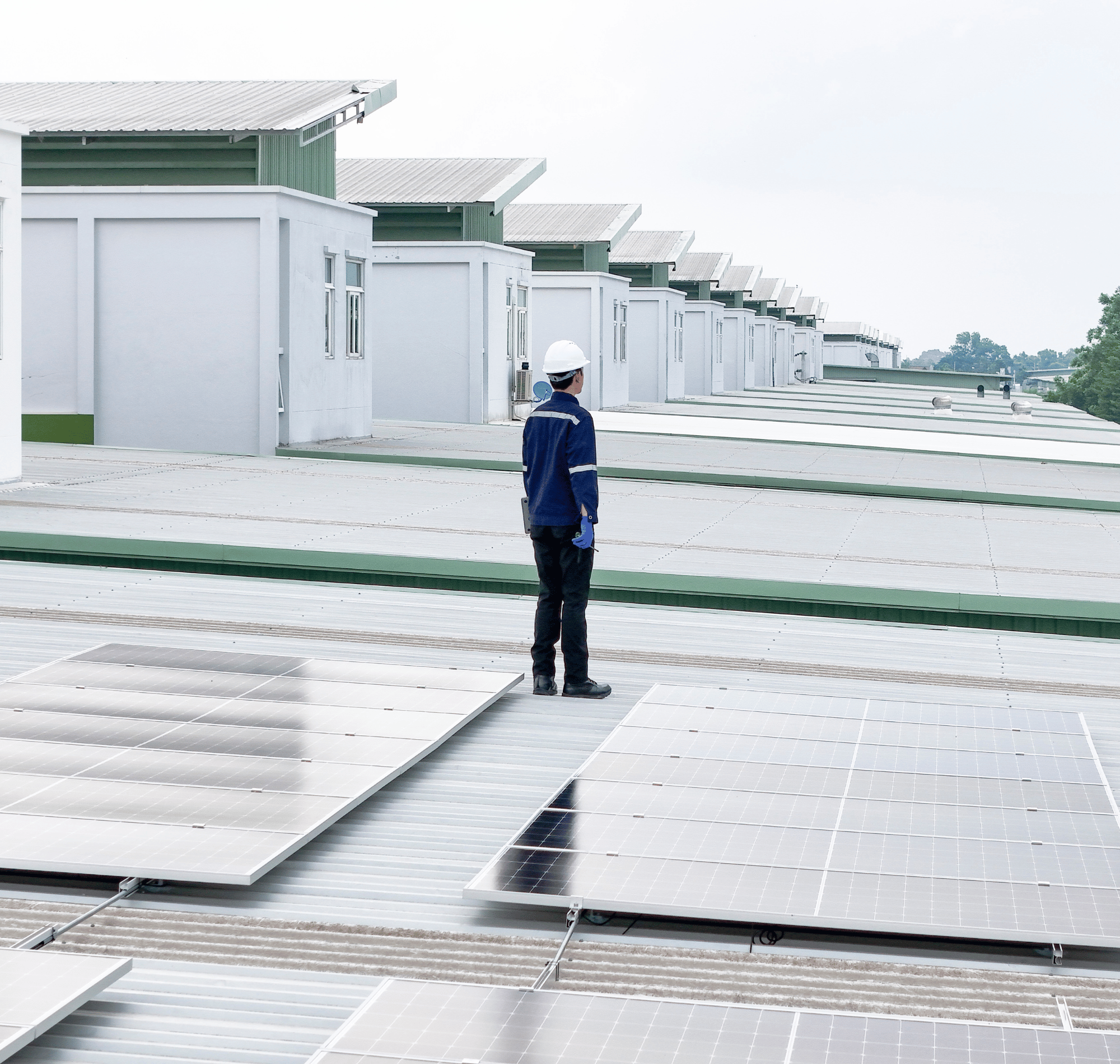
Everywhere you look solar panels are on the rise. Just take a quick drive around your local industrial estate and PV panels are increasingly commonplace, gracing the roofs of warehouses both large and small. For many businesses the motivation for installing solar panels is clear: lower energy bills and a smaller carbon footprint. Yet one factor often holds companies back – cost. Or to be more specific, the return on investment.
After all, the case for installing panels weakens significantly if it’s going to take a decade or more to recover the expense. But is that really the reality or simply media headline hype? Could the payback period for your business actually be much shorter than you think?
Let’s take a closer look and separate fact from fiction.

What Is the Solar Payback Period?
Understanding the solar panel payback period helps businesses plan confidently and make the most of clean-energy incentives.
In short, the payback period is the amount of time it takes for the cumulative savings from a solar installation to equal the upfront cost of the system. Once that point is reached, the business effectively generates free electricity for the remainder of the system’s lifespan.
For most UK commercial solar projects, the payback period currently sits between five and eight years, depending on energy usage, system size and export rates. And, with the average solar system lasting 20 to 25 years you can expect to make significant savings for more than two thirds of that time.
Factors Affecting Commercial Solar ROI
Several variables determine how quickly a solar investment pays for itself:
- System size and cost – Larger installations cost more initially but achieve greater long-term savings. Commercial systems often range from £1,000 to £1,300 per kilowatt installed
- Energy consumption patterns – Businesses that use the majority of their electricity during daylight hours (such as warehouses, schools, or manufacturing sites) can offset a greater portion of their energy bills
- Smart Export Guarantee (SEG) rates – Excess energy exported back to the grid earns a return, usually between 3p and 15p per kWh depending on the supplier
- Regional solar irradiance – Areas in southern England receive around 15–20% more sunlight than northern regions, improving generation performance
- Electricity price inflation – As energy prices continue to rise, solar savings compound faster, shortening the payback period
Example: Typical ROI For UK Businesses
To give you a solid idea of the ROI let’s consider a 50kW commercial solar array costing around £55,000 to £60,000.
- Annual electricity generation: roughly 45,000–50,000 kWh
- Annual bill savings (at 30p/kWh): £13,500–£15,000
- SEG income: approximately £1,500–£2,000 per year
In this scenario, total annual benefits exceed £15,000 meaning the system could pay for itself in under six years. Beyond that, every kilowatt-hour produced contributes directly to profit.
Maximising Your Solar ROI
The more you shorten your potential payback period, the faster you can make savings to your energy usage and profit from it. To do this, businesses should:
- Match their system size to their actual consumption, ensuring most generated power is used on site
- Invest in MCS-certified installations for access to export tariffs and quality assurance
- Monitor and maintain panels regularly to preserve peak efficiency
- Integrate energy storage where feasible, maximising self-consumption and protection against grid price spikes
Solar isn’t an instant fix but rather it should be viewed as a long-term strategic asset, lowering operational costs, improving environmental credentials and providing a visible commitment to sustainability.
A Smart Investment In The Future
With energy costs rising and clean-power incentives expanding, there’s never been a better time to invest in commercial solar. Payback periods of five to eight years mean most businesses will enjoy well over a decade of profit from their systems, which can make a significant dent in energy costs and ultimately business sustainability.
AEL Electrical specialises in the design and installation of MCS-certified commercial solar systems, ensuring your investment delivers the highest possible returns. Our expert team provides accurate ROI assessments, optimal system sizing and professional installation for long-term reliability and performance.
Take control of your energy future and contact AEL Electrical to start generating savings and sustainability that last. Get in touch today.
Image source: Canva
Choosing The Right Battery Storage System To Maximise Your Solar Investment
Why MCS Certification Matters When Choosing Your Commercial Solar Installer

No Comments Yet
Let us know what you think